
Stand up from your desk after a long call and look down. There it is. A thick, stubborn band of fabric where your shapewear used to sit flat.
Annoying? Yes. A sign you bought the wrong thing? Not always. Most of the time, shapewear rolls down because of a few small details, and every one of them is fixable.
This guide covers why your shapewear rolls down, how to stop it, and which shapewear for desk days actually earns its place. We’ll also walk through a typical workday, hour by hour, so you know exactly where things tend to go wrong.

Why Shapewear Rolls Down in the First Place
Think about what your body does at a desk. You fold at the hips. Your belly softens forward. Your torso gets shorter. Then you eat lunch, and everything shifts again.
A waistband has to cope with all of that. If it can’t flex, it does the only thing it can: it folds over itself.
According to this breakdown of why shapewear rolls down and how to stop it, the culprit is rarely a faulty garment. It’s usually a mismatch between your body and the piece’s size, structure, fabric or cut. That’s useful to know, because you can check every one of those yourself.
That’s useful to know, because you can check every one of those yourself.
Diagnose Your Roll
Different rolls point to different causes. Find yours in the table below.
| What you notice | What’s probably going on | What to try |
| The band folds the second you sit | It’s too small | Size up |
| It creeps down slowly over hours | No grip, or tired fabric | Silicone grip, fresher fabric |
| The band sits at your ribs, or below your belly button | The rise doesn’t match your torso | Try a different rise |
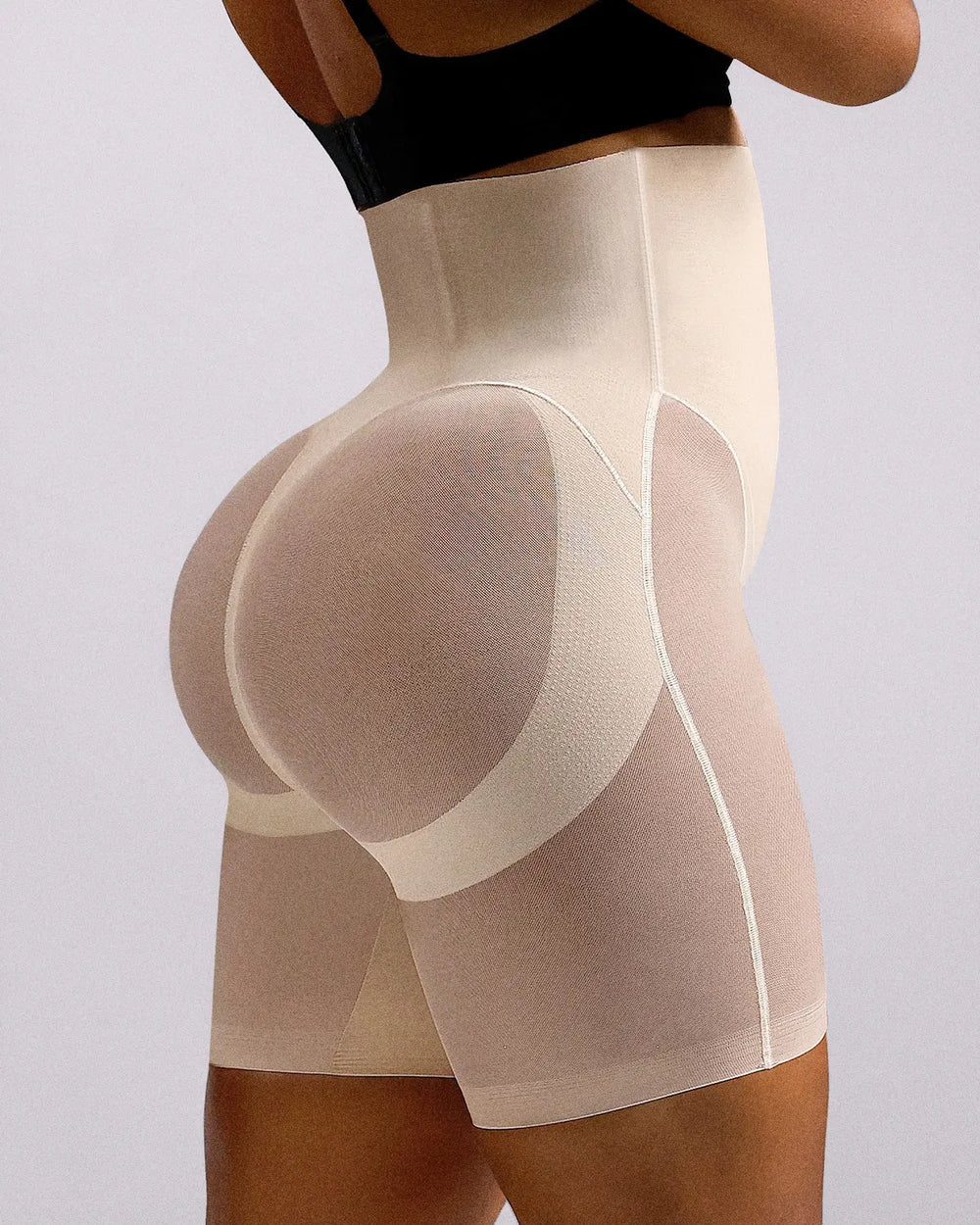
| Briefs ride up and the band flips | Nothing anchors the legs | Switch to shorts |
| It only rolls after lunch | Your belly needs more room | Go a level lighter |
| It used to be fine, and now it isn’t | The fabric has worn out | Replace it |
Spot something? Only one of those fixes involves a firmer piece, and even that one is about comfort, not strength. Rolling almost never comes from too little compression.
Product link
Three Myths That Keep You Rolling
Myth: a smaller size shapes better. It feels logical. But a piece that’s too small squeezes everything into less space, so the band has no room to move when you bend. You get bulges, pinching and a folded edge. Shapewear is built to fit firmly in your usual size, not to win a fight with your body.
Myth: a wider band fixes it. A wide elastic band adds pressure, not structure. Without a silicone grip or flexible boning inside, it still stretches and slips. Look at what’s built into the band, not just how thick it is.
Myth: the right wash can save a sagging pair. Once fabric stops springing back, care changes won’t restore it. If a pair bags out within the first hour of sitting, it has done its job. Retire it.

Free Fixes to Try Before You Buy Anything
Not ready to shop? Try these first.
Re-measure yourself. Bodies change, and size charts vary by brand. Measure your waist and hips, then match your numbers to the chart instead of guessing.
Run a 10-minute test. Wear the piece under your actual outfit. Sit, walk and bend for 10 to 15 minutes. Problems show up fast.
Skip the double layering. Two tight pieces together squeeze harder, and that’s a quick route to digging and rolling.
Check the leg bands. If the band at your thigh digs or rides up, it drags the whole piece out of place. Light marks after a long day are normal. Deep red lines mean it’s too tight.
What to Look for in a Pair That Stays Put
When you shop from a shapewear collection, check these five details.
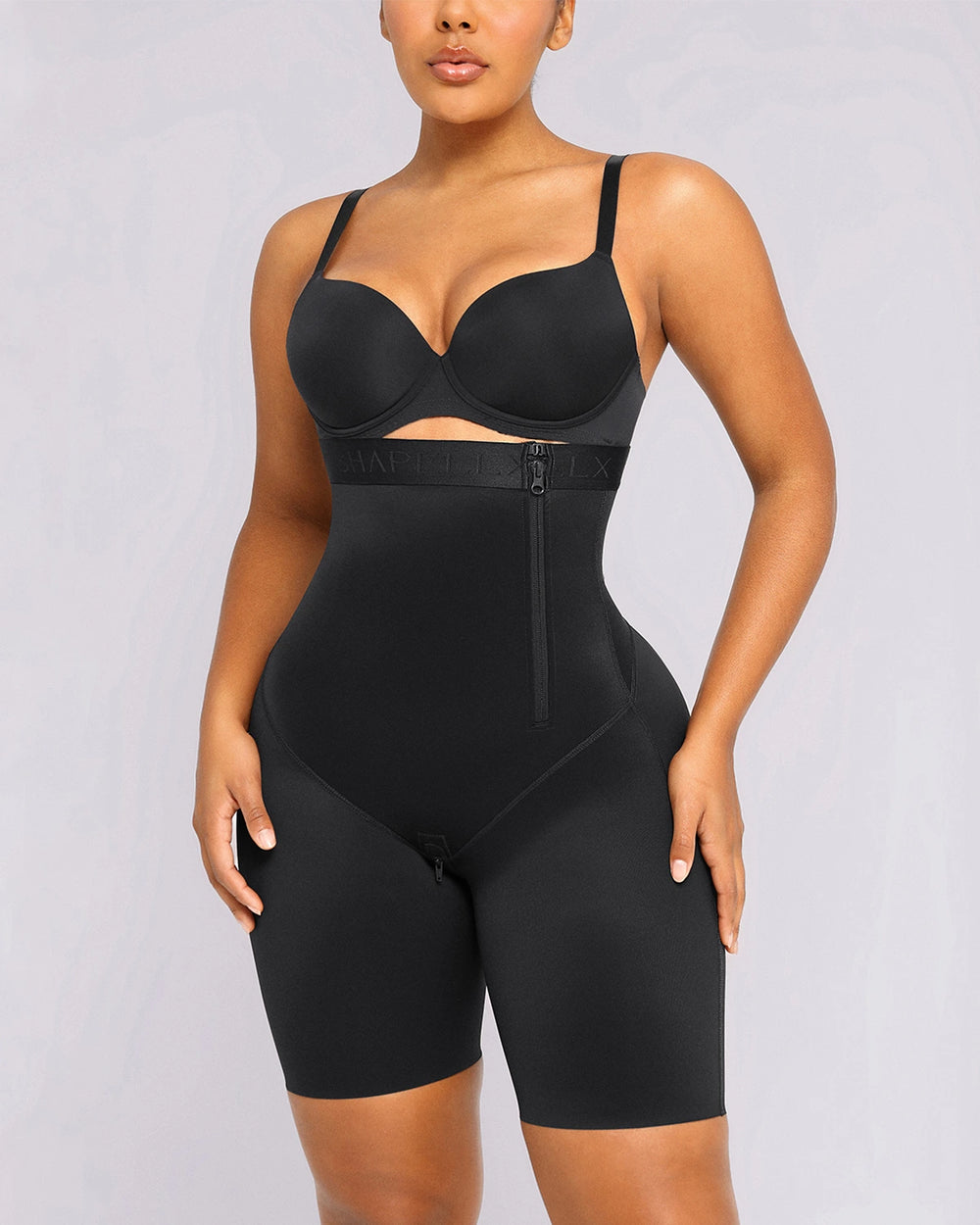
- A silicone grip. A strip along the inside of the waistband holds the fabric against your skin. It’s the single most useful anchor you can get.
- Flexible boning. It keeps the band from collapsing every time you fold at the hips.
- Fabric that bounces back. Good fabric returns to shape after you stretch it. Weak fabric stays stretched.
- A rise that fits your torso. A “high-waisted” cut can land at your bra line on a short torso and at your natural waist on a long one. Check where the waistline sits before you order. It should reach well above your belly button, so pressure spreads across your midsection instead of one thin line.
- Thigh coverage. Shorts anchor against your legs. Briefs end at the top of your thighs, so nothing holds them down while the waistband heads south. For long sits, shorts win.
Product link
A Day at the Desk, Hour by Hour
Here’s where it all comes together. Follow this timeline and you’ll catch problems early.
8:30 a.m. Getting dressed. Put your shapewear on and do a sit test before you add your outfit. Sit down. Bend forward. If the band folds or digs now, it won’t improve by noon. Then choose trousers or a skirt that sits at your natural waist. The outer waistband presses on the top of your shapewear and gives it a second anchor, for free.
10:30 a.m. The first long sit. This is where a poor fit shows itself. If you feel the band start to curl, don’t ignore it. A slow slide only gets worse.
1 p.m. Lunch. Your belly expands after eating, and a firm piece pushes back. Some doctors suggest changing out of a tight belly shaper after big meals to give digestion some room. If you can’t, choose a lighter piece on days with a long lunch.
3 p.m. The slump. Rolling again? Head to the bathroom. Pull the band up and smooth the fabric from the bottom up. Don’t fold the edge over itself, because that only makes a thicker roll. Then check your size and structure tonight. Fixing it twice a day isn’t a plan.
6 p.m. Taking it off. Wear it for the day only, never overnight. Hand wash it if you can and dry it flat. Heat and rough washing wear down stretch fabric faster, and worn fabric is one of the top reasons shapewear rolls down.
Your Next Step
Check your current pair against the table above. Most of the time, you’ll spot the problem in under a minute.